‘Never Disappear’: Chie Sakakibara Is Changing Climate Research From the Inside Out
By Catherine Scott
April 3, 2026
The professor’s decades-long partnerships with Indigenous Arctic and Japanese communities are yielding a new model for climate research—one that Maxwell is deliberately building on.
When Chie Sakakibara first traveled to an Iñupiaq community in Arctic Alaska as a graduate student, an elder gave her advice that would define her career.
“Never disappear,” she told her.
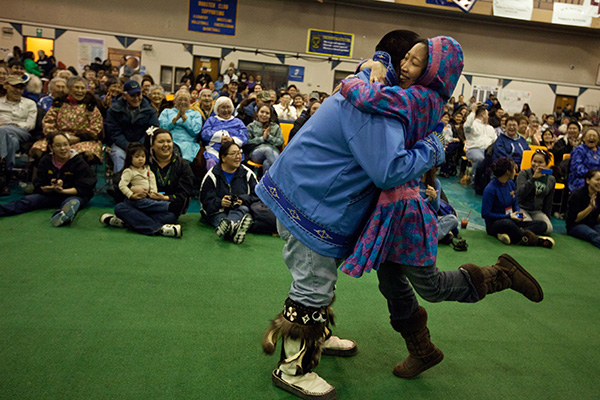
For generations, researchers had come to Indigenous lands, documented stories and environmental knowledge, and left—often without returning results or sustaining relationships. Community members asked Sakakibara to do something different: to document climate change from their perspective and to show that they were not simply victims of environmental disruption, but creative and resilient people adapting to change.
“I was honored, and I stayed,” Sakakibara says. “Placing yourself in a community means reciprocating and emphasizing their priorities, not just your own interests.”
More than two decades later, she is still returning.
Now an associate professor of geography and the environment in the Maxwell School, Sakakibara has built her scholarship around long-term collaboration and Indigenous research sovereignty—the idea that communities themselves should guide how their knowledge is used, represented and shared. Another focus of her work: the interconnected survival of people, animals and environments in a rapidly changing Arctic.
“Chie’s work is a model of what engaged scholarship looks like at Maxwell,” says Shana Kushner Gadarian, associate dean for research and professor of political science. “By centering Indigenous voices and building lasting partnerships across the globe, she demonstrates that rigorous research and genuine community responsibility are not competing values—they are inseparable ones.”
Sakakibara’s work reflects a deliberate institutional investment. She was hired in 2022 as part of Syracuse University’s research clusters initiative, which brought her to the Geography and the Environment Department alongside Karl Offen, a professor whose research spans historical geography, political ecology and Latin America and the Caribbean.
Connecting Communities
Sakakibara’s current initiative, “Indigenous Northern Landscapes: Visual Repatriation and Climate Knowledge Exchange,” connects the Iñupiaq people of Arctic Alaska with the Ainu community of northern Japan to explore environmental memory, cultural preservation and climate adaptation.
The work builds on years of fieldwork documented in her book Whale Snow: Iñupiat, Climate Change, and Multispecies Resilience in Arctic Alaska (University of Arizona Press, 2020), which received the American Association of Geographers’ Meridian Book Award for Outstanding Scholarly Work.
Both communities have endured land dispossession and the suppression of traditional language and faith. Both have retained and revitalized Indigenous ways of being—the Iñupiat through their relationship with the bowhead whale, sea ice and tundra; the Ainu through kinship with the brown bear, salmon, rivers and forests of Hokkaido.
“Their voices are only getting stronger through connecting and building relationships with other Indigenous communities and their allies within and beyond academia,” says Sakakibara, a research affiliate for the East Asia Program in Maxwell's Moynihan Institute of Global Affairs and a member of the Native American and Indigenous Studies Program and Center for Global Indigenous Cultures and Environmental Justice in the College of Arts and Sciences.
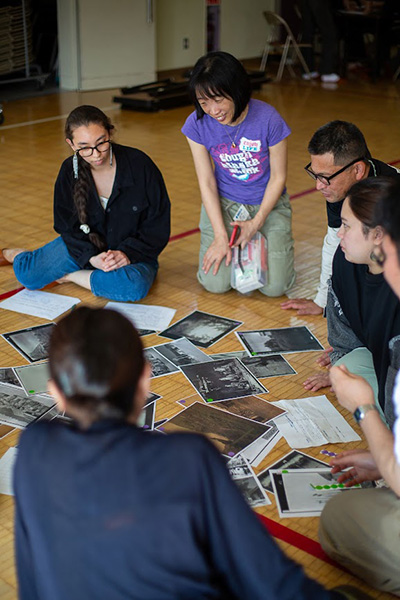
Her project employs repeat photography alongside community-led ethnography, fieldwork, oral history, archival research and collaborative museum curation. It emphasizes Indigenous knowledge and collaboration and juxtaposes early 20th-century and contemporary images, revealing sea ice loss, coastal erosion and shifting subsistence patterns due to environmental transformation.
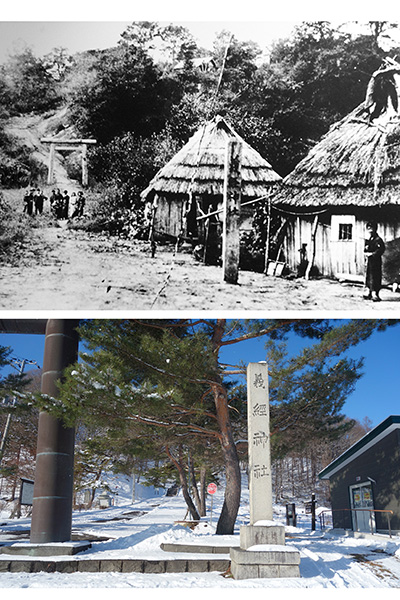
Working with the University of Alaska Fairbanks and the National Snow and Ice Data Center, the project collaboratively produces environmental knowledge by interpreting these historical photographs with the Indigenous descendants of the communities where they originated. The images document villages, hunting grounds and coastlines reshaped by rising sea levels, melting sea ice and, in northern Japan, dam construction that submerged ancestral landscapes.
“These photos aren't just archival materials,” Sakakibara says. “They are living witnesses.”
Future work will involve storymapping, participatory digital storytelling and traveling museum curation bridging Syracuse, Arctic Alaska and Japan.
Challenging the Myth
A persistent misconception frames Indigenous cultures as unchanging and separate from the modern world. Sakakibara sees that stereotype as an obstacle to effective climate policy.
“When policymakers or scientists assume that Indigenous peoples are merely relics of the past, they fail to recognize that communities like the Iñupiat and Ainu actively observe, interpret and respond to environmental change,” she says. “That blocks opportunities to incorporate Indigenous expertise into climate solutions.”
Iñupiat hunters continuously adjust whaling routes in response to sea ice change. Ainu communities combine historical ecological knowledge with contemporary observations to protect salmon runs. These are dynamic systems of environmental monitoring refined over generations, not static traditions.
“Resilience sometimes shows up in quiet ways,” Sakakibara says. “In storytelling, in humor, in caring for land and community.”
Rather than separating Western science from Indigenous knowledge systems, Sakakibara argues the two must be in conversation, especially as policymakers confront accelerating climate disruption. Climate change, she notes, is not solely a scientific challenge but a cultural and political one.
Climate disruption is among the most consequential challenges of our time, with implications that span policy, governance, culture and human well-being,” says Dean David M. Van Slyke. “Our students benefit from the wide-ranging expertise and experiences that Professor Sakakibara and colleagues provide.”
Students as Research Partners
Sakakibara brings her knowledge back to Syracuse—into classrooms, workshops and partnerships that give students direct exposure to the communities and questions at the center of her work.
In July 2024, Sakakibara partnered with public history experts from StoryCollab to facilitate a digital storytelling workshop on campus with Ainu collaborators. One collaborator from Nibutani, Japan, crafted a story about learning the Ainu language and passing it on to children; his daughter reflected on her own journey to embrace Ainu identity.
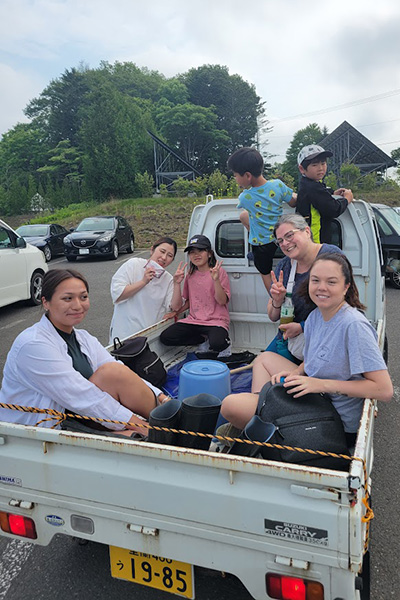
That same year, Sakakibara brought two Haudenosaunee undergraduate students to Japan to participate in workshops with Ainu community members, contributing to mapping projects and oral history initiatives conducted across English, Japanese and Ainu.
“They weren't just observing,” Sakakibara says. “They were fully immersed and dynamically engaged.”
One of those students, Katsitsatekanoniahkwa Destiny Lazore, a senior majoring in political science at Maxwell, is a member of the Saint Regis Mohawk Tribe and a 2025 Udall Scholar in Tribal Public Policy.
“At times, I even question whether I deserved such an opportunity,” says Lazore. “I am deeply humbled that Professor Chie chose me as one of her undergraduate research assistants and welcomed me into her beautiful culture.”
Hearing the stories of Ainu community members resonated in a personal way.
“It reminded me of what my own ancestors experienced, the struggle to protect culture, revitalize language and reclaim sovereignty,” says Lazore. “There was something powerful in recognizing that shared desire: the simple but profound wish to safeguard your people, your traditions and your future for the next generations to come.”
Rooted in Relationships
While shifts in federal research priorities and funding uncertainty have created challenges for long-term climate research, Sakakibara emphasizes that her commitments extend beyond any single grant cycle.
Her project has cultivated partnerships with major institutions including the Penn Museum, the Brooklyn Museum, the Yale Peabody Museum, the National Museum of Ethnology in Japan and the Center for Ainu and Indigenous Studies at Hokkaido University.
“The core goals—centering Indigenous knowledge, documenting environmental change and supporting cultural sovereignty—remain active and impactful,” Sakakibara says, adding that the elder’s advice—never disappear—remains central to her approach. “Research is about relationships. And relationships require responsibility.”
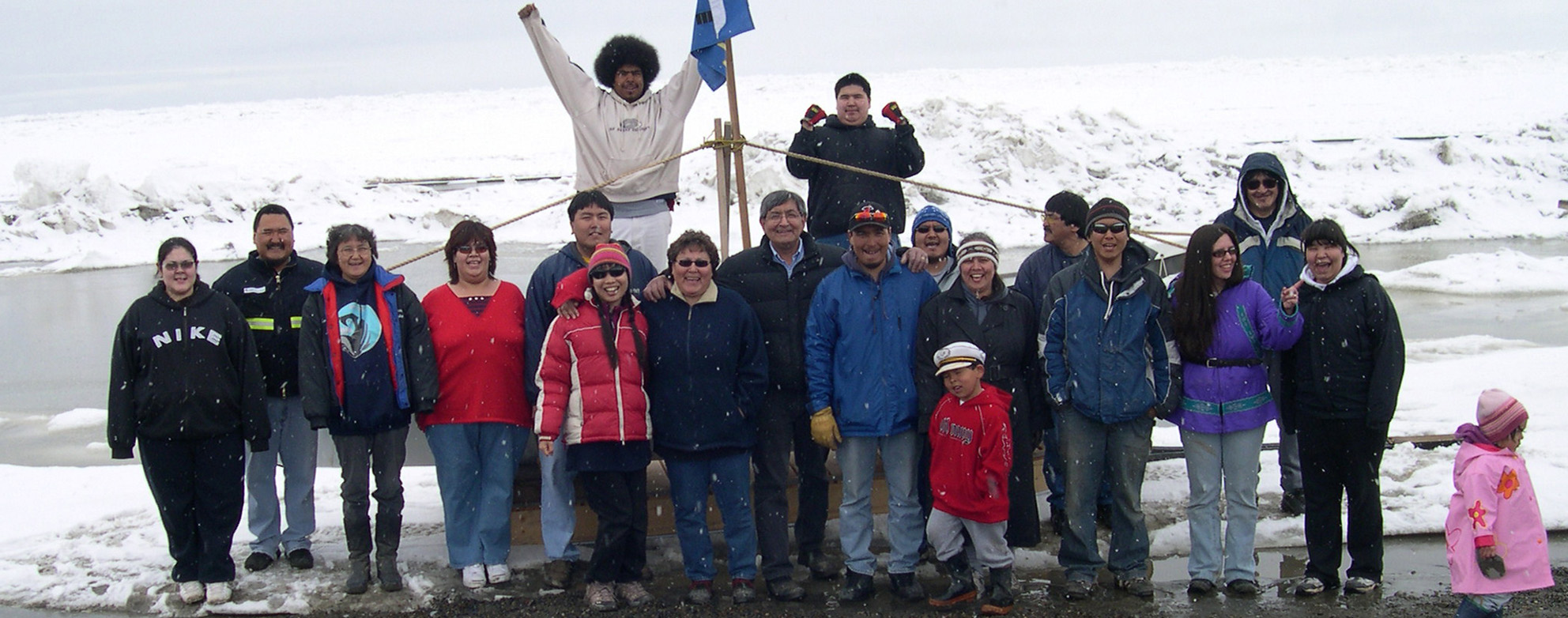
Top photo: After a successful whale hunt, members of the Iñupiaq community in Arctic Alaska gather to give thanks. Chie Sakakibara, associate professor of geography and the environment, is shown with the group, honoring the ecological knowledge, cooperation and cultural practices that have guided Iñupiaq whaling for centuries. Photo by Flossie Nageak.
Related News
School News
Apr 14, 2026
School News

Apr 13, 2026
School News

Apr 9, 2026
